
A successful test flight, which was recently undertaken from Den Helder Airport to wind turbines, underscores the leading role the airport aims to play and maintain in this area.
According to those involved, the pre-planned drone flight is not only a “first” for the wind energy sector but also for Dutch aviation. Director Conny van den Hoff sees great potential in it. “What makes this first flight special is that it is the first flight to take place in the Netherlands in public airspace over the sea. During such a flight, the drone is out of the operator’s direct line of sight. We are making our facilities available for these types of high-tech operations and are thus playing a pioneering role in the development of drone flights for offshore applications.”
The Primoco One 150, a light unmanned aircraft equipped with special cameras, was used for the flight. The drone took off from Den Helder Airport and flew a preprogrammed pattern over the area where the Ecowende Hollandse Kust West wind farm is being built, about 53 kilometers off the coast of IJmuiden.
A major advantage of drones compared to conventional airplanes or helicopters is that drones emit far less CO₂. Hermione van Zutphen, ecology program manager at Ecowende, has calculated the reduction achieved. She says: “We used to conduct our monitoring flights with an airplane that emits 136 kilograms of CO₂ per hour. The Primoco One 150 UAV emits only 10.86 kilograms of CO₂ per hour, even though it flies about half as fast. This reduces our CO₂ emissions by approximately 84 percent per flight. That is an important step toward our goal of building a wind farm with minimal environmental impact.”
The use of drones instead of manned aircraft not only reduces emissions but also improves safety, according to Van Zutphen. “A crew is no longer needed for inspection and survey flights in offshore wind farms. With this successful mission, we are taking an important step toward a more sustainable and safer offshore wind industry.”
Hermione van Zutphen, Ecology Program Manager: “This allows us to reduce our CO₂ emissions by approximately 84 percent per flight. That’s an important step toward our goal of building a wind farm with minimal environmental impact.”
Engineers are raving about the insights gained during the recent test flight, which also provided valuable ecological insights. “The drone is equipped with the integrated HiDef video system, which captures images in very high resolution. Thanks to this technology, the marine ecosystem can be monitored efficiently and accurately without disturbing the animals.”
Significant progress has also been made in the field of data collection. “By integrating the HiDef video system into drones, we are taking an important step in the transition from manned aircraft to unmanned technology for high-quality, efficient data collection,” said Christian Vlasak, Chief Engineer at BioConsult SH, who is closely involved in the project.
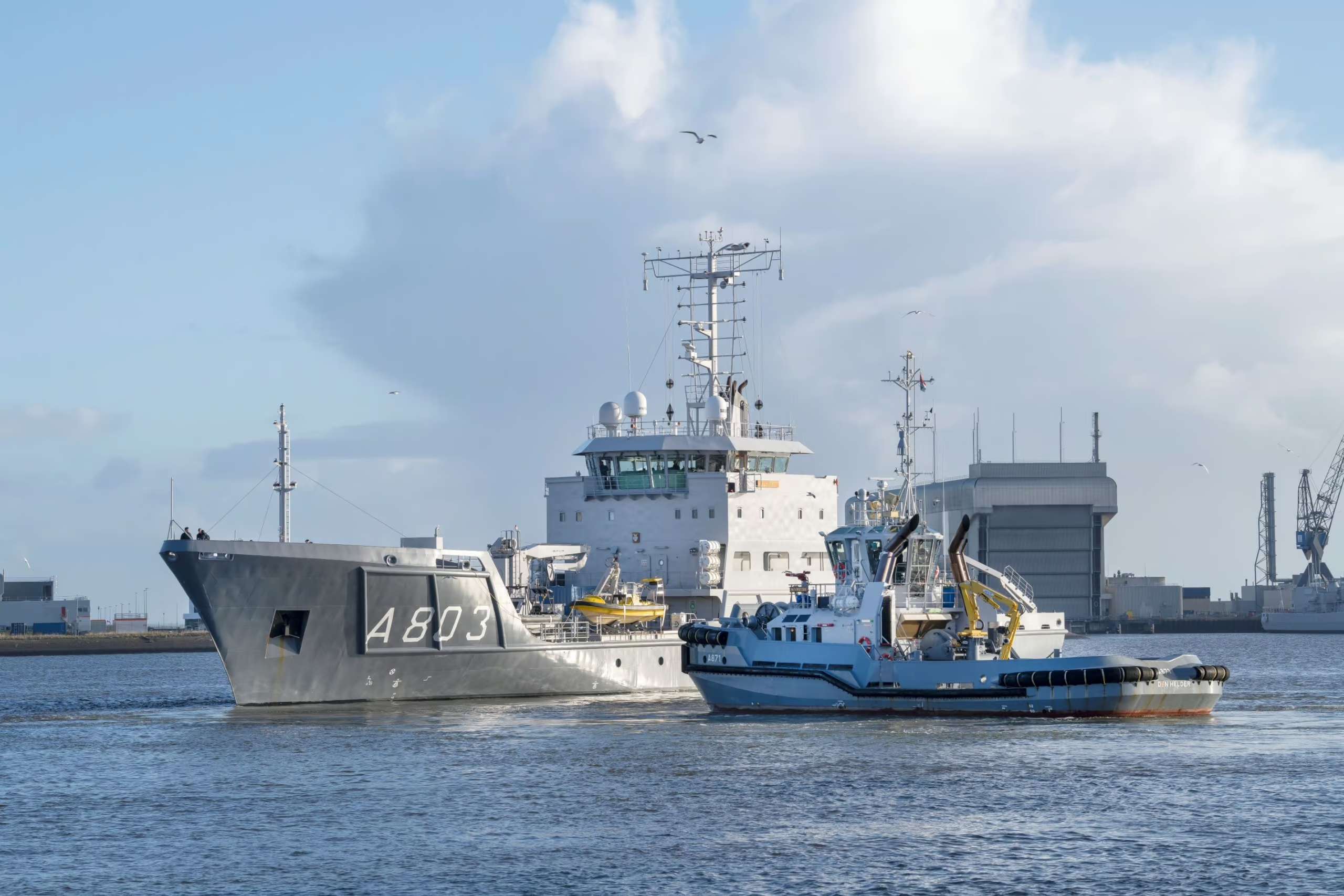
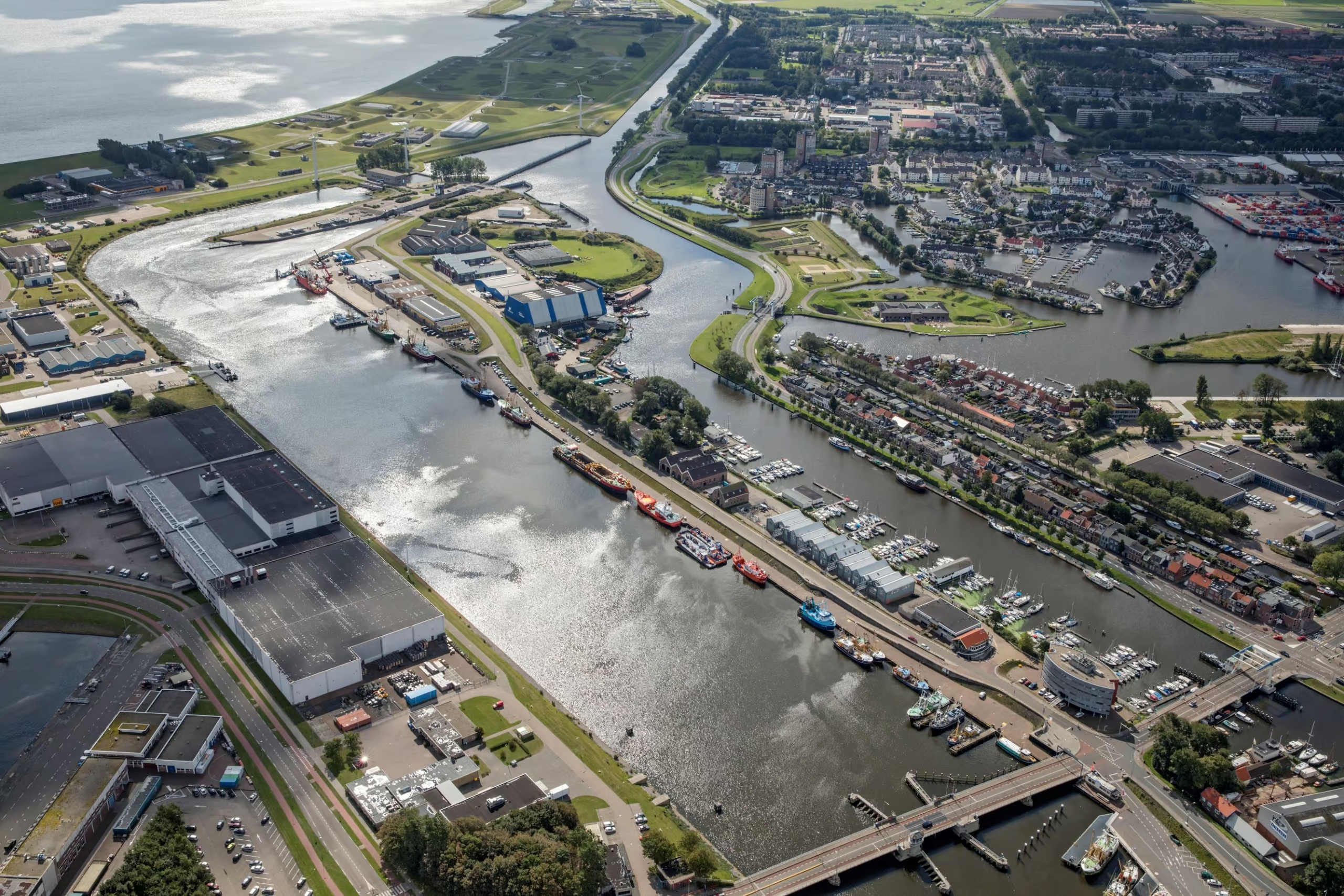
Den Helder Airport’s pioneering role aligns seamlessly with the philosophy of the Maritime Cluster. In this initiative, the government and the business community (including the defense sector) are joining forces to “put Den Helder even more firmly on the map as the ‘capital of the North Sea.’”
Port Councilor Fotigui Camara recently emphasized the importance of the Maritime Cluster. “As a strategic maritime hub, Den Helder has been contributing to safety, energy supply, and innovation on a national scale for decades. The combination of defense, infrastructure, and entrepreneurship makes our city—both now and in the future—a vital link for a safe and future-proof Netherlands.”
According to Camara, Den Helder’s strategic location is of decisive importance. Consequently, an increasing number of companies operating in the offshore sector are making use of the facilities available along the Het Nieuwe Diep waterfront. With the energy transition in mind, a bright future lies ahead here thanks to the direct route to the open sea.
But Den Helder also offers plenty of opportunities from the mainland. Den Helder Airport is proof of this. It’s no surprise that a private seminar was held on Tuesday, March 10, at this civil airport to discuss experiences gained and the future of drones.
Source: Noordhollands Dagblad, Coen van de Luytgaarden
Photo: Nadezda Murmakova – CC BY-SA 4.0, via Wikimedia Commons.